Are engineers becoming worthless? Yet the software market is racing toward $58.2 billion: when 180 million people can all build software, AI is turning software creation into the next growth frontier
I've recently been talking with a lot of fellow engineers, engineering managers, tech leads, and investors who used to back software companies, and they all keep bringing up the same thing: is the software industry dying because of AI's rise?
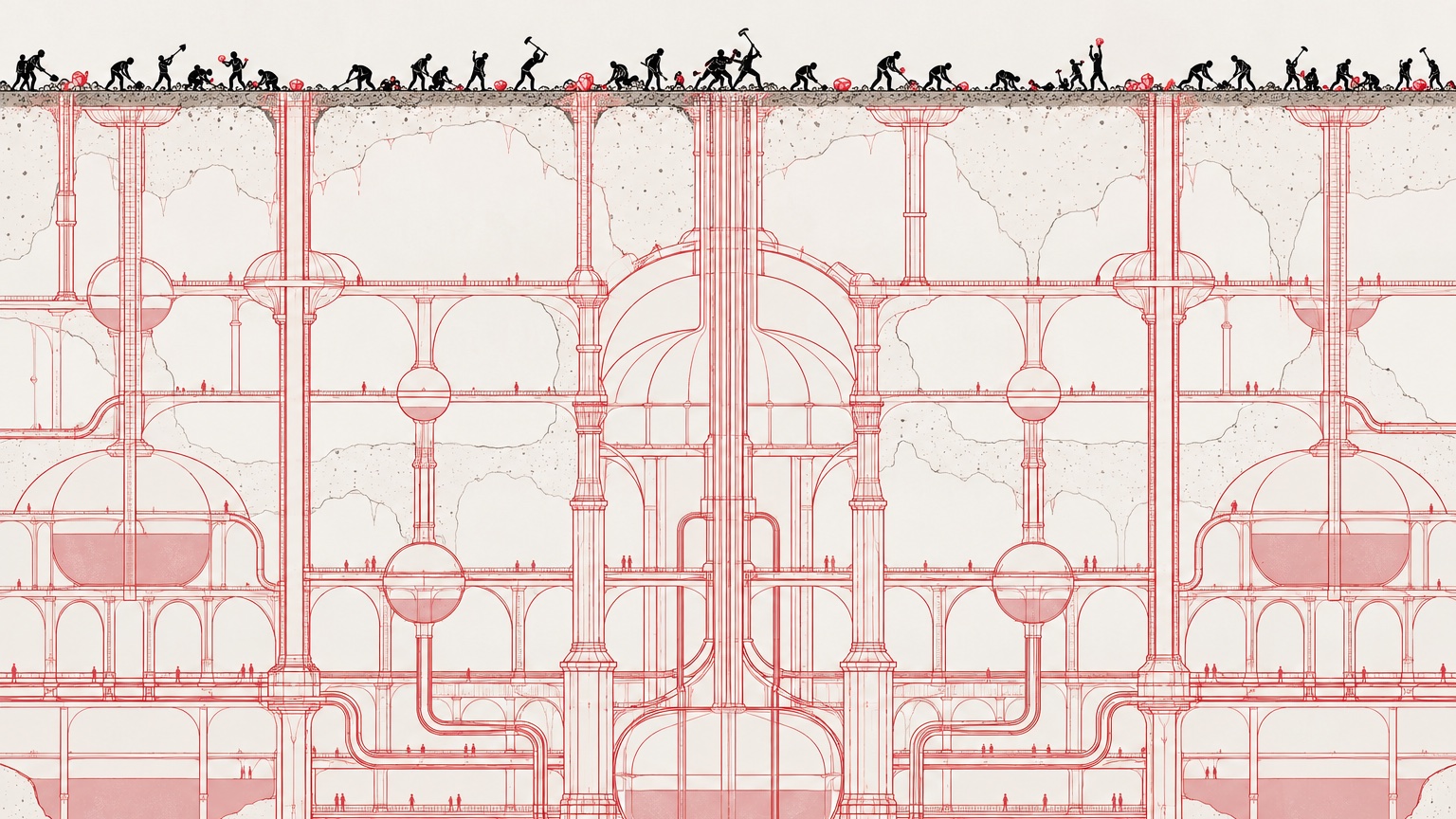
Why Aotter Keeps Building the Data Layer and the Application Layer
Now, finally, it's Aotter's turn.
This is the underlying logic connecting what might look like a scattered bunch of products we've built recently. What Aotter has always set out to do is actually simple:
Shorten the time it takes to create value.
In the past, we worked on data, because data was scattered across different places, hard to see, and slow to organize—so we tried to shorten the chain from data → insight → decision. With AI, this chain can now extend even further forward:
Idea → Data → Context → Logic → Application → Action → Value
Every segment of this can now start being accelerated by an Agent. So what we're especially focused on right now are the two layers most prone to breaking in the middle:
The Data Layer solves whether AI actually knows what's happening inside a company. The Application Layer solves whether, once AI knows what's happening, it can actually "do things."
If the Software Creator population really does expand from "developers" to "everyone who understands the business," the imagined user of a product has to change too. Instead of asking "would an API engineer understand this?" we now have to ask "can someone who understands retail work alongside an Agent to build out a retail workflow?"; instead of "will the backend team be able to deploy this?" we now have to ask "can this marketing manager turn their own daily repetitive tasks into an application?"—and even "can an Agent itself discover that a tool is missing, and then build that tool?"
So the collaboration tools, data products, and application infrastructure we're building now—including SaaS products like Mantle—are targeting a market bigger than the developer tools market:
Software Creator Infrastructure.
When everyone has the potential to become a Software Creator, what they need is very concrete: a set of infrastructure that lets humans, Agents, data, and applications collaborate reliably—without requiring three years of computer science study first.
This will also rewrite the definition of a "software company." In the future, many companies' core competitiveness will shift from "we have 300 engineers" to "our 30 people can direct 300 Agents, simultaneously operating 200 internal and external software products." At that point, the people who truly matter at a company will be the ones who deeply understand workflows, customers, their industry, data, who are excellent at defining problems, who understand the underlying systems, and who are skilled at judging whether AI actually got it right. Human value is shifting from production toward judgment × domain expertise × architecture × taste × accountability.
My Humble Take, in Summary
In my view, stacking these five sets of data together, I'd sum up my perspective in four statements:
First, engineers will split into two camps, software will explode, and the Software Creator will become an independent role. The pure execution-focused Programmer role will shrink, as the BLS data already shows; infrastructure-level engineers will become scarcer and more expensive; people who deeply understand a vertical and can also direct Agents will become enormously leveraged; people who were never engineers at all will, for the first time, join the software economy. The share of the population doing professional coding will decline, while the population doing software creation will rise dramatically—both of these things will happen at the same time. The difference between Software Creators and Programmers lies in their starting point (problem vs. spec), their tools (intent and judgment vs. syntax), their output (outcomes vs. features), their location (business units vs. IT), and their responsibility (gatekeeping vs. implementation)—and this group will be the single biggest driving force in the next phase.
AI's first-order effect is "engineers write three times as much code in a day"; its second-order effect is "people who never used to make software start making software"; but its third-order effect is the biggest of all: "software that never would have been worth building before now becomes worth building." A workflow used internally at a company for just three days, a management tool used for only two days at a single event, a game friends play together for two hours one night, a lead-gen app a salesperson builds for a single month's campaign, a scheduling Agent a restaurant builds for itself. In the past, none of these had a market, because the cost of development was too high; as the marginal cost of producing software approaches zero, all of them will start to appear.
Third, code generation will become a commodity, and the money will flow toward the infrastructure layer. Data, permissions, deployment, monitoring, protocols, platforms, and "how humans and Agents can safely operate the same piece of software together." The numbers from DORA, MCP, WebMCP, and Anthropic are all describing exactly this.
Fourth, Aotter's position is exactly at this layer. Shortening the distance from data to application, shortening the time from idea to value, and waiting for this Software Creator population to truly explode.
So if someone asks me "will AI shrink the market for software engineers," my answer is: certain engineering jobs, yes. But software itself is standing at the threshold of the biggest market expansion in human history.
Sources
- U.S. Bureau of Labor Statistics, Occupational Outlook Handbook — Computer Programmers (2025–35 projections): https://www.bls.gov/ooh/computer-and-information-technology/computer-programmers.htm
- U.S. Bureau of Labor Statistics, Occupational Outlook Handbook — Software Developers, Quality Assurance Analysts, and Testers: https://www.bls.gov/ooh/computer-and-information-technology/software-developers.htm
- U.S. Bureau of Labor Statistics, Occupational Outlook Handbook — Information Security Analysts: https://www.bls.gov/ooh/computer-and-information-technology/information-security-analysts.htm
- U.S. Bureau of Labor Statistics, Employment Projections — Occupational projections and worker characteristics (Total, all occupations, 2025–35): https://www.bls.gov/emp/tables/occupational-projections-and-characteristics.htm
- SlashData, Developer Population (48.4M, Q3 2025): https://www.slashdata.co/developer-population
- SlashData, Global Developer Population Trends 2025: https://www.slashdata.co/post/global-developer-population-trends-2025-how-many-developers-are-there
- GitHub, Octoverse 2025 (2025/10/28): https://github.blog/news-insights/octoverse/octoverse-a-new-developer-joins-github-every-second-as-ai-leads-typescript-to-1/
- Stack Overflow, 2025 Developer Survey — AI: https://survey.stackoverflow.co/2025/ai
- Gartner, Forecast Analysis: Low-Code Development Technologies, Worldwide (2025/11/4): https://www.gartner.com/en/documents/7146430
- Gartner press release, Gartner Forecasts Worldwide Low-Code Development Technologies Market to Grow 20% in 2023 (2022/12/13): https://www.gartner.com/en/newsroom/press-releases/2022-12-13-gartner-forecasts-worldwide-low-code-development-technologies-market-to-grow-20-percent-in-2023
- Google Cloud, Announcing the 2025 DORA Report — State of AI-assisted Software Development: https://cloud.google.com/blog/products/ai-machine-learning/announcing-the-2025-dora-report
- Model Context Protocol official blog, The 2026-07-28 Specification: https://blog.modelcontextprotocol.io/tags/protocol/
- Chrome for Developers, WebMCP origin trial (2026/6/9): https://developer.chrome.com/blog/ai-webmcp-origin-trial
- WebMCP Explainer (webmachinelearning): https://github.com/webmachinelearning/webmcp
- Anthropic Economic Index, Uneven geographic and enterprise AI adoption (2025/9/15): https://www.anthropic.com/news/economic-index-geography
- a16z, Good news: AI Will Eat Application Software (2026/3/2): https://a16z.com/good-news-ai-will-eat-application-software/
- a16z, Cursor + SpaceXAI: the fastest iterating team wins (2026/8/14): https://a16z.com/cursor-spacexai-the-fastest-iterating-team-wins/
 AI Advisory · Powered by MCP
Want to go deeper? Make AOTTERSMAN your AI advisor
The full reasoning and hands-on checklist behind this insight live in the AOTTERSMAN knowledge base. Install the MCP and your existing AI assistant (Claude / Cursor / Gemini…) can tap AOTTERSMAN's thinking frameworks directly — like having an extra AI advisor always on call.
Turn scattered data into consistent answers
Bring data from ERP, Excel, and NAS into one consistent layer your AI can safely tap.