To Sell Electricity, You Also Have to Sell Lamps: AI's Seven Entry Points — Which Layer Should Service Providers Bet On?
We counted up the entry points into AI — there are seven. This article goes through them layer by layer, and along the way figures out where the "electricity" comes from at each layer and who pays the "electricity bill."
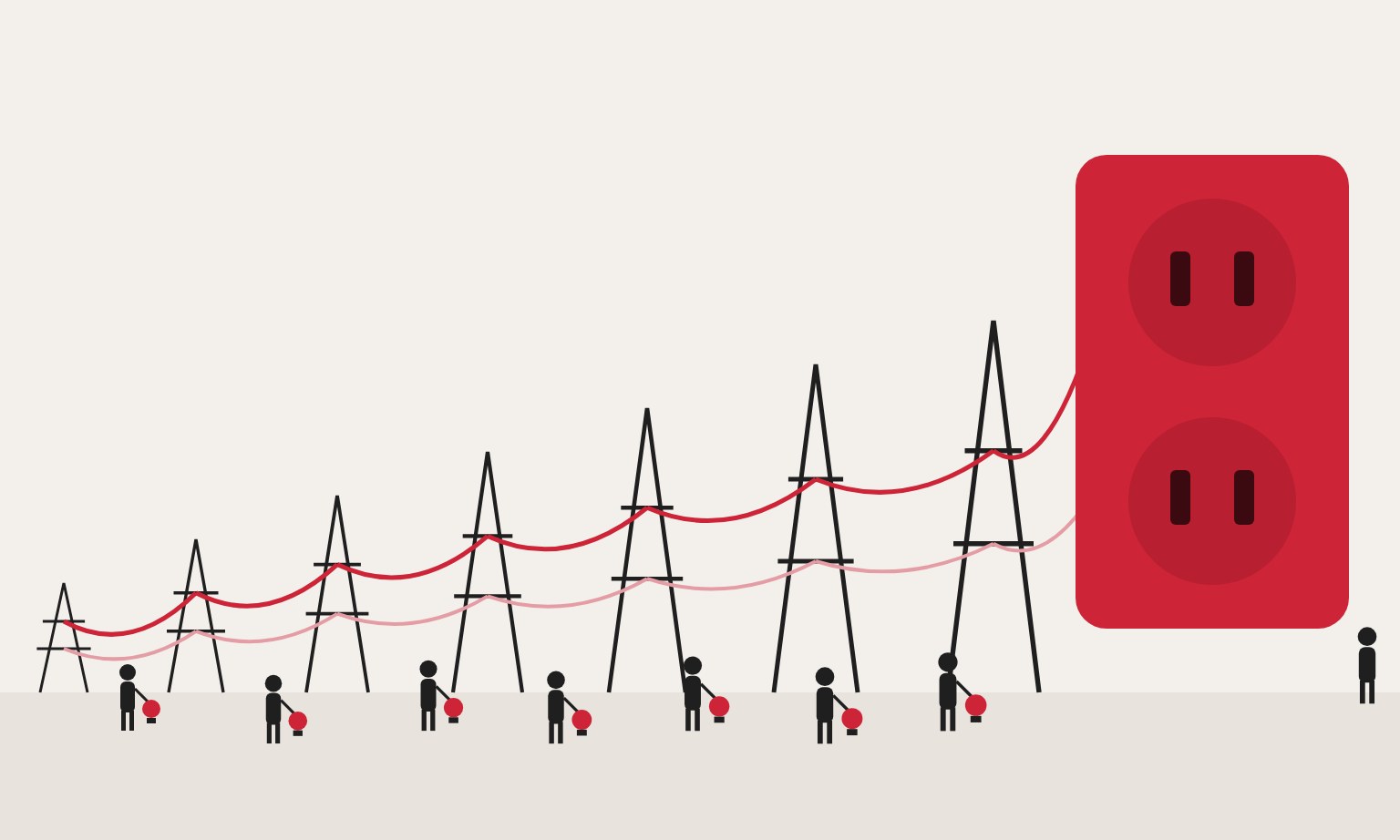
We count them up, and there are seven AI entry points. This piece goes through them layer by layer, and along the way works out where the "electricity" for each layer comes from, and who pays the "electric bill." Those of us in ad tech are especially sensitive to entry points: whoever controls the entry point gets paid. PC, search, social, mobile — every time the device changes, the entry point changes too. Now it's AI's turn.
The entry point is changing hands again
It's now November 2026. There's no doubt that AI has redistributed the map of entry points through which users access the internet.
As people in ad tech, we feel this especially keenly. Looking back at the history of digital advertising: personal computers brought portal sites and banner ads, Google brought keyword ads, Facebook brought personalized ads, the iPhone moved everything onto mobile. Every business that lives off entry points has had to relocate each time.
AI is the next handover. But this time there's a question that didn't exist before: as a software service provider, we don't just have to chase the entry point — we also have to worry about who pays the "electric bill."
To sell electricity, you also have to sell lamps
We often compare the current moment to the early days when electricity first became commercialized. Back then there was no power grid, so whoever sold electricity had to generate it themselves, run the lines themselves, and sell light bulbs on the side — otherwise nobody would buy the electricity.
That's exactly what the model vendors are doing now. Generating power means training models and providing compute; distributing power means APIs and billing; and then they go all the way to the end device too: web chat, mobile apps, desktop agents, CLI, and this second half of the year they've even handed you a cloud computer.
There's nothing wrong with the vendors doing everything end-to-end — without lamps, electricity can't be sold. What's getting stuck is us, the ones selling the appliances.
The service providers' electric bill problem
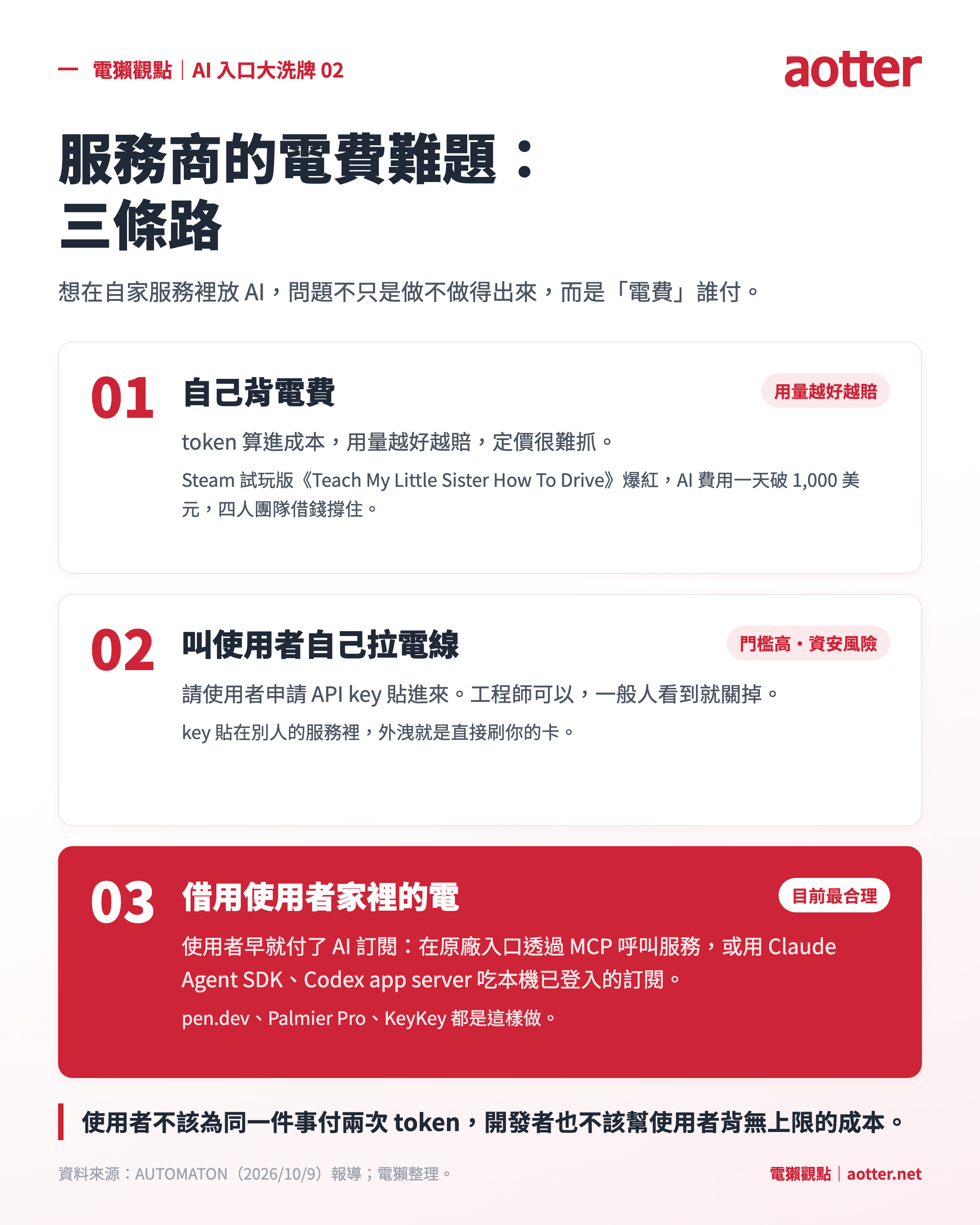
For service providers like us who sell appliances, the biggest headache right now is: users don't have electricity at home to use. If you want to put AI into your own service, over the past two years there have basically been three paths:
- Carry the electric bill yourself. Tokens get counted as cost, and the better the usage, the more you lose money, making pricing very hard to set. AI games cry about this the most: the Steam demo of "Teach My Little Sister How To Drive" went viral in Japanese streaming circles, player numbers grew more than twentyfold in a month, AI costs exceeded $1,000 a day, and the four-person team had to borrow money from a bank just to keep it running.
- Ask users to run their own power line. Have them apply for an API key and paste it in. Engineers can do this, but ordinary people just close the app when they see it. The security risk is also high: a key pasted into someone else's service means a leak charges straight to your card.
- Borrow the electricity already at the user's home. The user has already paid for an AI subscription, so let them call us through the vendor's entry point via MCP; or, like the pen.dev design tool, Palmier Pro, and the KeyKey editing software, directly use the Claude Agent SDK or the Codex app server to tap into the subscription already logged in on the user's computer.
The third path is currently the most reasonable one. Our principle is simple: users shouldn't have to pay for the same token twice, and developers shouldn't have to shoulder unlimited costs on behalf of users.
 AI Advisory · Powered by MCP
Want to go deeper? Make AOTTERSMAN your AI advisor
The full reasoning and hands-on checklist behind this insight live in the AOTTERSMAN knowledge base. Install the MCP and your existing AI assistant (Claude / Cursor / Gemini…) can tap AOTTERSMAN's thinking frameworks directly — like having an extra AI advisor always on call.
Turn scattered data into consistent answers
Bring data from ERP, Excel, and NAS into one consistent layer your AI can safely tap.